
BJP’s Push For Uniform Civil Code in Madhya Pradesh triggers unease among 21% tribals


Senior Correspondent
NewsBits.in
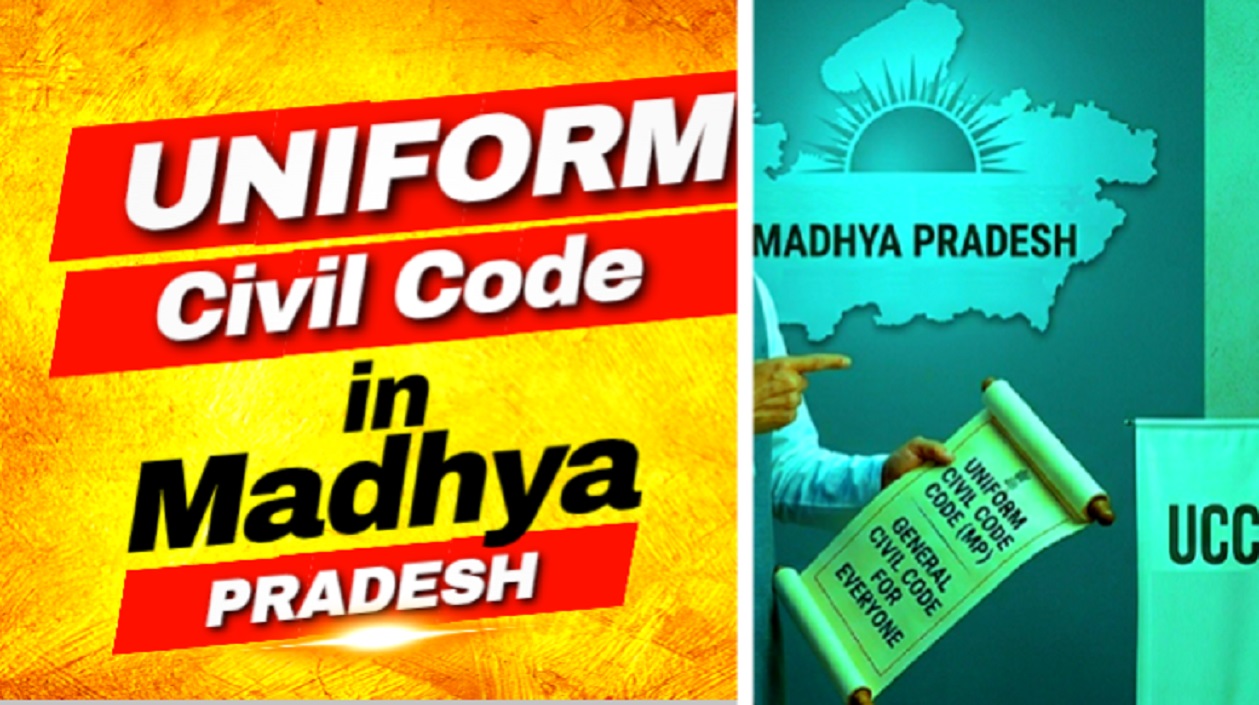
BHOPAL: After over two decades in power, the Bharatiya Janata Party (BJP) government in Madhya Pradesh, facing criticism over rising debt, institutional corruption, and internal factionalism, has turned its attention to the Uniform Civil Code (UCC).
On April 28, 2026, the state government constituted a six-member committee to examine the modalities for implementing a UCC, with a mandate to submit its report within 60 days. The panel, formed by the Department of Law and Legislative Affairs a day earlier, is headed by retired Supreme Court judge Ranjana Prasad Desai.
Other members include retired IAS officer Shatrughna Singh, advocate Anoop Nair, educationist Gopal Sharma, social activist Bushpal Singh, and General Administration Department secretary Ajay Katesariya.
The committee has been tasked with examining laws related to marriage, divorce, maintenance, succession, live-in relationships and others. It will conduct public consultations, review draft frameworks prepared in states like Gujarat and Uttarakhand, and submit a comprehensive report along with a draft bill.
The UCC was a key promise in the BJP’s 2023 Assembly election manifesto. Yet, it took over 30 months to constitute the panel. The opposition Congress party has alleged that the move is a diversion from internal conflicts, rising corruption, and mounting state debt.
"Madhya Pradesh’s debt, estimated at around ₹3 lakh crore in 2023, has reportedly doubled to nearly ₹6 lakh crore in the current fiscal year. Between December 2023 and February 2026 alone, the state borrowed ₹1.69 lakh crore; averaging about ₹6,500 crore per month," said Umang Singhar, leader of Opposition in Madhya Pradesh assembly.
Among BJP-ruled states, Goa already follows a version of the UCC with certain exceptions, while Uttarakhand and Gujarat have passed a UCC law in the process of implementing one in phases.
Madhya Pradesh becomes the third state to appoint Justice Desai to head a UCC-related panel, after Uttarakhand and Gujarat. Desai, 76, began her judicial career as a High Court judge in 1996 and was elevated to the Supreme Court in 2011.
After retiring in 2014, she held several key positions, including chairperson of the Appellate Tribunal for Electricity and the Advance Ruling Authority.
Since 2018, she has chaired the Lokpal Search Committee, which recommends appointments to the anti-corruption ombudsman. In 2020, she headed the Delimitation Commission for Jammu and Kashmir following the abrogation of Article 370, a process that drew criticism from several political parties in the region.
She later led the Uttarakhand UCC expert committee in 2022 and currently serves as Chairperson of the Press Council of India. In 2023, Gujarat also appointed a committee under Justice Desai to assess the need for a UCC and prepare a draft.
The formation of the panel in Madhya Pradesh has triggered concern among tribal communities, which constitute about 21% of the state’s population. Several tribal groups, along with Leader of Opposition Umang Singhar, who belongs to the Bhil community, have urged the government to clarify whether the proposed law will be implemented through consensus or imposed.
Madhya Pradesh, which has one of the largest tribal populations in the country, is also home to three Particularly Vulnerable Tribal Groups (PVTGs), with a combined population exceeding 13 lakh. Members of these communities have expressed apprehension about the potential impact on their customs and identity.
“We are already shrinking in numbers, with just over one lakh Baigas left. Widow remarriage is common in our culture, sometimes within the family. In certain cases, a woman may remarry even if the man is already married. If a uniform code is implemented, will it allow us to continue these age-old practices?” asked Nandram Semarkhapa, a Baiga tribal from Chhindwara.
In Uttarakhand and Gujarat, tribal communities were kept outside the ambit of proposed UCC frameworks. The activists, however, argue that replicating that model in Madhya Pradesh may not be feasible.
“A state with 21% tribal and 17% Dalit population is very different from Gujarat or Uttarakhand,” said Gulzar Singh Markam, a rights activist from Mandla. “Even if tribals are excluded, how will the law function when every fourth person in the state belongs to a tribal community?”
Responding to the concerns, Tribal Affairs Minister Kunwar Vijay Shah said it was premature to comment. “As far as I know, there is no such rule that allows tribals to have multiple wives. It is too early to draw conclusions. We should wait for the committee’s report,” he said.
The formation of the UCC panel has opened Pandora's box for media and the social media which is buzzing over the UCC, neglecting the failure and shortcomings of the government. The UCC will either bite the dust or get passed in the assembly, but the government seems to have succeeded in diverting public attention.