
Construction arbitration needs technical literacy: Lawyers must keep learning, upgrading themselves


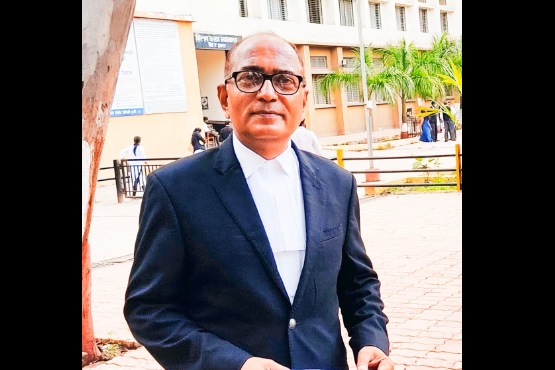
By Shahid Parvez Sayed
NewsBits.in
At a construction law conference organized by the Society of Construction Law India (SCL), at the Four Seasons Hotel a few years ago, attended by nearly 200 lawyers, an Australian arbitrator Bruce Collins of Kings Court opened with a line that has stayed with me:
“If you can’t read construction plans, you shouldn’t be in this room". It was not theatre. It was a statement about competence. What made the remark linger was not just its bluntness—but its accuracy. In a room of that size, only a small fraction would have been comfortable reading a construction drawing without assistance.
I remember feeling quietly reassured. Before law, I spent a decade working on highway planning, design and construction with the Georgia Department of Transportation, Atlanta, GA. On a typical project, even a modest 2 km stretch of a two-lane highway with a turn lane can involve hundreds—often over a thousand— drawings, followed by revisions, superseding sheets, and as-built changes.
In construction, the real story is rarely in the pleadings. It is usually hiding somewhere between Drawing No. 487 and Revision 6 of Sheet C-102—waiting, with admirable patience, for someone to actually look at it.
The Reality Check
In India, construction arbitration sometimes proceeds as if technical literacy were optional. Hearings are rich in arguments, authorities, and adjectives—but thinner when it comes to drawings, quantities, and sequencing.The results are predictable:
• Delay claims that stretch further than the highway itself
• Variation claims where “change” is asserted, but not demonstrated
• Experts who are heard, but not always understood
This is not a criticism of individuals. It is a reflection of a systemic imbalance. We are exceptionally good at arguing the law and occasionally less comfortable reading the project.
A Small Example from Practice
In one matter, a contractor claimed delay due to changes in road geometry and
drainage design. On paper, it was a persuasive case—new drawings, additional
scope, inevitable delay.
But the drawings had a different view.
A closer examination showed that many of the “revised” drawings were, in fact, clarifications and corrections rather than entirely new instructions. More importantly, when these changes were mapped against the project schedule, the affected activities were not on the critical path at the relevant time.
In simple terms:
Yes, additional work was executed. No, it did not delay the project in the manner claimed.
The dispute ultimately turned not on advocacy, but on a quieter question:
What do the drawings actually say—and when do they begin to matter?
Or, put differently: In construction disputes, drawings don’t lie—but they do wait patiently for someone to read them. Construction disputes are about cause and effect, not just claims and counterclaims.
When dealing with:
• Hundreds (sometimes thousands) of drawings
• Multiple revisions and site instructions
• Interdependent activities affecting time and cost
...it is not possible to resolve disputes from 30,000 feet. At some point, one has to
come down to ground level—and read the plan. Otherwise, arbitration risks
becoming a forum where everyone speaks with great confidence... about documents
no one has actually opened.
If arbitration is to deliver on its promise of expertise, a few shifts are worth considering:
1. Mixed-Expertise Panels
Construction disputes benefit from a combination of legal and technical competence,
not a choice between the two.
2. Early Technical Framing
Identify the real issues at the outset—scope, measurements, baseline programme,
and the governing drawings.
3. Respect for Drawings and Schedules
These are not annexures. They are the backbone of the dispute.
4. Disciplined Use of Experts
Expert evidence should illuminate, not substitute the decision-maker’s
understanding.
A System Under Gentle Correction
There is also a broader shift underway and the Government of India has, in recent
years, shown an increasing preference for mediation in commercial disputes. This is
not merely a procedural innovation.
It reflects a practical reality.
Arbitration awards are being challenged and, in a number of cases, set aside where technical issues have not been adequately engaged with. Courts are, in effect, being asked to correct what should have been properly decided the first time.
India has long aspired to be a global hub for arbitration. The ambition is well-founded. But credibility in arbitration rests not on aspiration, but on outcomes that withstand scrutiny—both legal and technical. Where that confidence wavers, the system adapts.
A Constructive Challenge
The remark by Bruce Collins was not exclusionary. It was aspirational. In a field where even a short stretch of highway can generate thousands of technical documents, the ability to read and interpret them is not an added skill—it is a foundational one. India does not lack talent.
What is required is alignment—between the nature of disputes and the skills of those entrusted to resolve them.
You can win an argument without reading the drawings—with sufficient eloquence, even convincingly. But you cannot resolve the dispute. And if arbitration is to remain what it claims to be—a forum for expert determination rather than elegant disagreement, then at some point, someone in the room must open the drawing. And know what they are looking at.
[Shahid P Sayed is a senior lawyer who practices at the Bombay High Court]