

Responsible use of artificial intelligence stressed for spatial planning and disaster risk reduction


Senior Correspondent
NewsBits.in
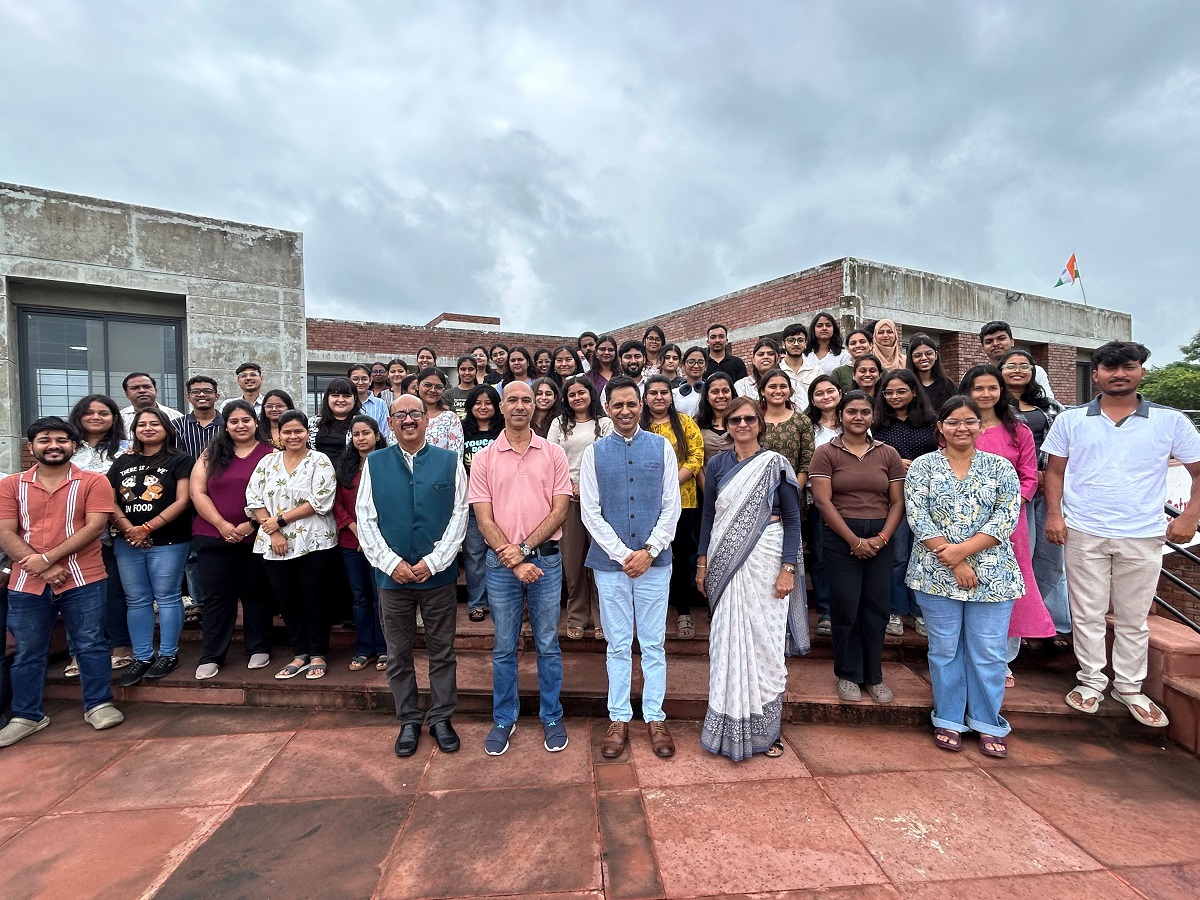
BHOPAL: The School of Planning and Architecture (SPA), Bhopal, in collaboration with UNICEF, organised a two-day workshop on “AI - Theory and Practice in Spatial Planning and Research” on 17-18 August 2026.
The workshop brought together Ph D scholars and final-year postgraduate students to explore AI applications in spatial planning, urban governance; disaster risk reduction, climate resilience and research.
The workshop was mentored by Dr Kailasa Rao, Director, SPA Bhopal, with Dr Rama Pandey, Dean Academic, as Workshop Coordinator and Dr Mayank Dubey, Doctoral Programme Coordinator, supporting the programme.
Delivering the opening remarks, Dr Rao highlighted the importance of understanding AI alongside its responsible application, noting, “AI is rapidly transforming the way we learn, research and plan. Our students and researchers must understand both its capabilities and its responsible use.”
The workshop featured sessions by experts across AI, DRR, education, spatial analytics and climate resilience. Anil Gulati, Communication Specialist, UNICEF Madhya Pradesh, emphasised that “AI can be a powerful decision-support tool for disaster risk reduction, but it cannot replace human judgment.”
Ashish Das, AI Educator and Entrepreneur, led the session on “ShikshaAI: Equipping Students for the AI-Powered Future”, highlighting the importance of effective AI use: “The real advantage of AI lies in knowing how to make it work for us - from asking the right questions to choosing the right tool.”
Technical sessions by Dr Ranit Chatterjee, Co-founder, RIKA India, covered AI and Big Data, Machine Learning, Remote Sensing, GIS, Spatial Analytics, and Ethics and Data Security, with Dr Chatterjee stressing that “Technical capability must go hand in hand with ethical responsibility, particularly around privacy, data security, transparency and accountability.”
Payal Pidurkar, Lead AI Engineer, Resilience AI, led sessions on data-driven solutions for climate risk resilience planning, noting, “The value of technology lies in translating data into solutions that are practical, locally relevant and resilient.”
Reflecting on the workshop, Dr Rama Pandey emphasised the importance of preparing students for a technology-enabled future, saying, “Creating opportunities to understand and apply AI thoughtfully will help prepare students and researchers for a more technology-enabled future.”
The two-day programme combined expert lectures, discussions and practical exposure to AI tools, highlighting the importance of integrating technological innovation with professional expertise, human judgment and responsible decision-making.